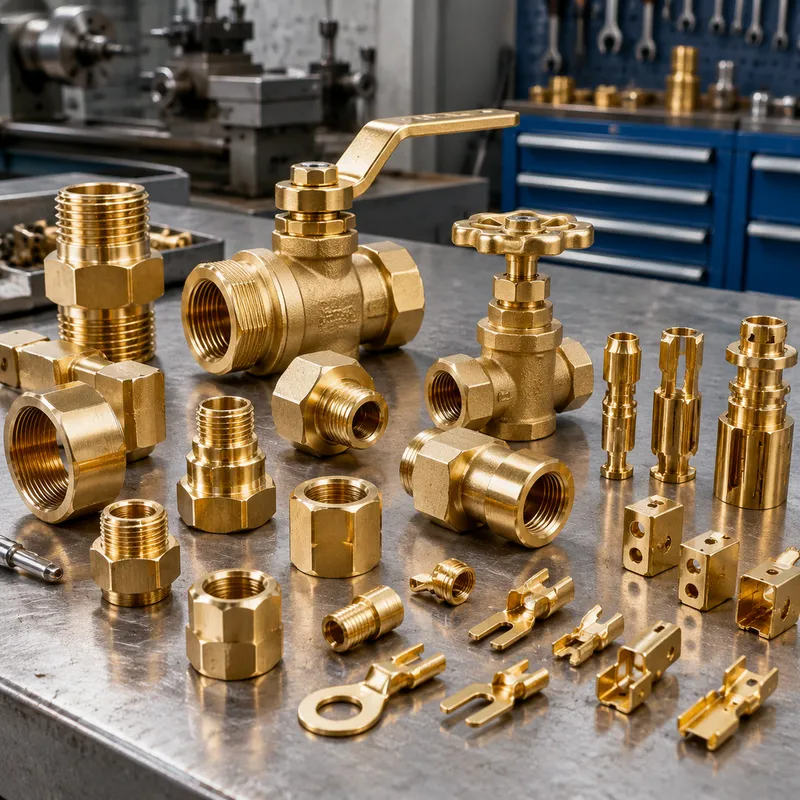
ชิ้นงานทองเหลืองที่เราตัดเฉือนครอบคลุมข้อต่อประปา เนื้อวาล์ว คัปปลิ้ง เทอร์มินัลไฟฟ้า และชิ้นงานตกแต่ง: C36000 ทองเหลืองตัดเฉือนคล่องสำหรับชิ้นงานกลึงปริมาณสูง C260 ทองเหลืองกระสุนเมื่อการขึ้นรูปและความสามารถในงานเย็นสำคัญ C693 ทองเหลืองปลอดตะกั่วสำหรับข้อกำหนดน้ำดื่ม
ทองเหลืองเป็นหนึ่งในโลหะที่ตัดเฉือนง่ายที่สุด — ทำงานที่ความเร็วสปินเดิลสูงพร้อมการควบคุมเศษสับที่ยอดเยี่ยม เราระบุค่ากำกับตะกั่วและการชุบระหว่างการทบทวน DFM เพื่อให้ชิ้นงานสำเร็จรูปตรงตามข้อกำหนดน้ำดื่มและ RoHS ในจุดที่ระบุไว้
Material Grades & Properties
Brass Grades We Machine
| Grade | Standard | Characteristics |
|---|---|---|
| C36000 (free-cutting) | ASTM B16 | Best machinability of common metals; standard for turned parts. |
| C26000 (cartridge) | ASTM B36 | Good cold workability; used for deep-drawn and formed parts. |
Key Properties of Machined Brass
- ✓Excellent machinability
- ✓Natural corrosion resistance
- ✓Attractive appearance
- ✓Good electrical conductivity
Typical tolerances:±0.05 mm standard; excellent surface finish as-machined
Applications for Brass Parts
- Plumbing fittings and valves
- Electrical connectors and terminals
- Musical instrument parts
- Decorative hardware
- Instrument components
Machining Notes for Brass
Reference standard for 100% machinability rating; very high cutting speeds; watch for lead-free variants (C360 is leaded) in potable-water applications.
Finishes for Brass Parts
- Polishing
- Lacquer coating
- Nickel plating
- Antique/aged finish
ความสามารถ
- ตัดเฉือน C36000/C260/C693 ตามแบบสั่งผลิต
- เรขาคณิตเกลียวและข้อต่อในเซ็ตเดียว
- การประสานงานการเคลือบโครเมต ชุบนิกเกิล และดีบุก
- การตกแต่งผิวปลอดครีบ (burr-free) สำหรับผิวซีล
วัสดุที่ใช้ทั่วไป
ทองเหลือง C36000, C260, C34500, ปลอดตะกั่ว C693 (Eco Brass) เมื่อขอ
| วัสดุ / เกรด | สภาพโดยทั่วไป | ความสามารถในการตัดเฉือน | เหมาะกับงานใด |
|---|---|---|---|
| อะลูมิเนียม 6061 | T6 (ชุบแข็งสารละลายและอบชรา) | ง่าย: ตัดเฉือนได้คล่อง ควบคุมเศษสับได้ดี | แบร็กเก็ต ฮาวส์ซิ่ง ฟิกซ์เจอร์ ต้นแบบจนถึงงานผลิต |
| อะลูมิเนียม 7075 | T6 / T651 | ยากกว่า: เครื่องมือสึกเร็วกว่า ต้องการการยึดชิ้นงานที่แข็งแรง | ชิ้นงานความแข็งแรงสูง รับน้ำหนักวิกฤต; ไม่เหมาะกับการเชื่อม |
| สแตนเลสสตีล 304 / 304L | อบอ่อน | แข็งตัวจากงานเย็น: ความเร็วตัดต่ำกว่า ใช้การป้อนเชิงบวก | ความต้านทานการกัดกร่อนทั่วไป เครื่องมืออาหารและกระบวนการผลิต |
| สแตนเลสสตีล 316 / 316L | อบอ่อน | เหนียวกว่า 304: เครื่องมือสึกมากกว่า | สัมผัสคลอไรด์ ทะเล การแพทย์ และเภสัชกรรม |
| เหล็กกล้าคาร์บอน 1018 / 1045 | ล้อออกมาใหม่ / อบชุบปกติ | ง่ายถึงปานกลาง; ต้องกันสนิม | เพลา แผ่นงาน ชิ้นงานเชื่อม เนื้องานแม่พิมพ์และเครื่องมือ |
| ทองเหลือง C360 | H02 กึ่งแข็ง | ยอดเยี่ยม: ความเร็วสูง ผิวเรียบสะอาด | ข้อต่อประปา บุชชิ่ง คอนเนกเตอร์ ชิ้นงานตกแต่ง |
| ทองแดง C110 | อบอ่อน / H02 | เหนียวติดมีด: ต้องใช้เครื่องมือคมและมุมรับตัดสูง | การนำไฟฟ้า รางไฟฟ้า (บัสบาร์) การจัดการความร้อน |
| ไทเทเนียม Grade 5 (Ti-6Al-4V) | อบชุบ (mill annealed) | ยาก: ความเร็วต่ำ ต้องควบคุมความร้อน เครื่องมือสึกเร็ว | อวกาศอากาศยาน การแพทย์ และชิ้นงานแข็งแรงสูงน้ำหนักเบา |
| พลาสติกวิศวกรรม (POM, PEEK, PA) | อัดขึ้นรูป / อบลดความเค้น | ง่ายถึงเหนียวติดมีด: ใช้จับปากอ่อน เครื่องมือคม | ฉนวน ลดแรงเสียดทาน ชิ้นงานทนเคมีและทนการสึก |
การตกแต่งผิว
เคลือบโครเมตใส/เหลือง ชุบนิกเกิล ชุบดีบุก การขัดผิว การพ่นลูกแก้ว
| การตกแต่งผิว | ทำอะไร | ระบุเมื่อ |
|---|---|---|
| ตัดเฉือนตามแบบ (as machined) | รอยเครื่องมือปรากฏ; Ra โดยทั่วไป 1.6–3.2 ไมครอน | ชิ้นงานต้องใช้งานได้เท่านั้น |
| พ่นลูกแก้ว | ผิวด้านสม่ำเสมอ ปิดบังรอยเครื่องมือ | ชิ้นงานแสดงผลก่อนการอโนไดซ์ |
| อโนไดซ์ Type II | สร้างชั้นออกไซด์; มีตัวเลือกสี | ลุคอะลูมิเนียมบวกความต้านการกัดกร่อนและการสึกปานกลาง |
| อโนไดซ์แข็ง Type III | ชั้นออกไซด์หนากว่าและแข็งกว่า | ผิวอะลูมิเนียมที่ลื่นไถลหรือสึกหรอ |
| เคลือบโครเมต | ฟิล์มป้องกันบาง ๆ ที่ยังนำไฟฟ้าได้ | การเชื่อมไฟฟ้าหรือการต่อกราวด์บนอะลูมิเนียม |
| ชุบนิกเกิลแบบไร้กระแสไฟฟ้า | ชั้นสม่ำเสมอ แข็ง ต้านการกัดกร่อน | ทนการสึกบวกการกัดกร่อน รวมถึงภายในรูกระทกร้อน |
| ชุบสังกะสี | การป้องกันการกัดกร่อนแบบพลีชีพที่ประหยัด | ชิ้นงานเหล็กในอาคารหรือที่มีที่กำบัง |
| พ่นสีผง | ชั้นหนา ทนทาน ตกแต่งได้ | เมื่อรูปลักษณ์คือข้อกำหนด |
| พาสซิเวชัน | ขจัดเหล็กอิสระและฟื้นฟูฟิล์มออกไซด์ | ชิ้นงานสแตนเลสหลังการตัดเฉือน |
| อบลดความเค้น / การอบชุบ | ลดความเค้นตกค้างก่อนหรือหลังการตัด | ผนังบางและค่าคลาดเคลื่อนแคบที่ต้องอยู่รอดผ่านการตัดเฉือน |
ค่าคลาดเคลื่อน
มาตรฐาน ISO 2768-m; ±0.01 มม. บนจุดวิกฤต
| ค่ากำกับบนแบบ | ต้องการอะไร | ผลต่อต้นทุนและระยะเวลาผลิต |
|---|---|---|
| ทั่วไป: ±0.25 มม. / ±0.010 นิ้ว | เครื่องมือมาตรฐาน ตรวจวัดขนาด | ฐานต้นทุน: ไม่มีค่าเพิ่ม |
| มาตรฐาน: ±0.13 มม. / ±0.005 นิ้ว | เครื่องอยู่ในสภาพดี ตรวจชิ้นงานแรก | ค่าเพิ่มเล็กน้อย; เป็นค่าเริ่มต้นปกติของการเสนอราคา |
| แคบ: ±0.025 มม. / ±0.001 นิ้ว | เครื่องมือลับหรือเพชร ควบคุมอุณหภูมิ ใช้ CMM | เปลี่ยนขั้นอย่างชัดเจน: การตัดช้าลงบวกการตรวจทั้งชิ้น |
| แม่นยำ: ±0.013 มม. / ±0.0005 นิ้ว | รอบตัดสุดท้าย เกจวัด สภาพแวดล้อมควบคุม | การตัดเฉือนกำหนดราคา; มักเป็นกระบวนการแยก |
| ตำแหน่ง / มุมเอียง (GD&T) | ควบคุมจุดอ้างอิง ใช้เซ็ตเดียวเมื่อจุดเกี่ยวเนื่องกัน | ขึ้นกับว่าจุดอ้างอิงกินกี่เซ็ตเครื่อง |
| ผิวเรียบ Ra 0.8 ไมครอนหรือละเอียดกว่า | ระยะฟันหยักละเอียดขึ้น ขัดผิวหรือรอบตัดสุดท้าย | เพิ่มขั้นตอนกระบวนการ ไม่ใช่แค่เวลาตัดเฉือน |
Materials We Machine
- Alloy 260
- Brass
- Copper
- Zinc
Common Applications
- Antimicrobial Surfaces
- Appliance Parts
- Architectural Applications
- Architectural Finishes
- Compression Fittings
- Conductive Parts
- Connector pins & sockets
- Decorative Components
- Decorative hardware
- Decorative pieces
- Electrical Hardware
- Electrical Parts
- Electrical Terminals
- Fishing Applications
- General Hardware
- Grounding Hardware
- Industrial Fittings
- Industrial and Appliance Clips
- Marine hardware
- Medical and telecom components
- Meter Bodies
- Ornamental Work
- Pins and Terminal Blocks
- Plumbing Parts
ตัวเลือกกระบวนการ
- CNC machining is a subtractive manufacturing process.
- Finishing Options: Black Oxide, Electropolishing, ENP, Media Blasting, Nickel Plating, Passivation, Powder Coating, Tumble Polishing, Zinc Plating, Vibratory Tumbling
- EPX 82 is processed using Carbon DLS
- MUD is a type of mold that uses a standard injection molding frame.
- Different taper turning methods suit different jobs. Compound slides often handle short tapers, while CNC interpolation and taper attachments improve repeatability on longer parts
- G92 is used by programming one or more G92's right after the G76 threading cycle
- Estimates are provided through an auto-quoted method.
- EDM relies on a voltage and a thin wire
- Advanced machining processes like micro-machining and EDM are used to create small, precise mold cavities and cores
Surface Finish Reference
- The finish of MoldTech MT11010 is a fine matte texture.
- The finish of MoldTech MT11020 is a medium matte texture.
- The finish of MoldTech MT11030 is a coarse matte texture.
- SPI A-1 has a surface roughness of 0.012–0.025 µm.
- SPI B-2 has a finish of Medium semi-gloss.
- SPI B-2 has a surface roughness of 0.10–0.15 µm.
- SPI C-3 has a surface roughness of 0.63–0.70 µm.
- Super high gloss, polished with a Grade #3 (6000-grit) diamond buff to Ra 0.012–0.025 µm.
- Medium semi-gloss, finished with 400-grit paper to Ra 0.10–0.15 µm.
- Normal matte, polished with 320-grit stone to Ra 0.63–0.70 µm.
Tolerance Reference
- The tolerance with drawing for CNC Milling is as low as +/- 0.005 mm.
- FDM 3D printing offers a low-cost component with average accuracy and uses thermoplastics for 3D printing.
- Wire Cut EDM is highly accurate.
- The U6 H.E.A.T machine achieves tight tolerances.
- Die sinker EDM is capable of maintaining tight tolerances
- The shop needs to have CNC machines that can achieve a specific tolerance.
Industries We Serve
- antennas
- automotive
- CNC machined parts
- custom parts
- electronics
- medical diagnostic
- optical displays
- optical_systems
Material Reference
- ABS
- Austenitic Stainless Steel
- Carbon steel
- ceramic
- composites
- Copper - T2
- copper or graphite
- Hardened Materials
- High Impact Polystyrene
- Low-density polyethylene
- MDF
- metal
- Polybutylene Terephthalate
- SUS304
- thermoplastics
- thick metal sheets
- tungsten carbide
คำถามที่พบบ่อย
ทองเหลืองเกรดใดเหมาะกับข้อต่อน้ำดื่ม?
C693 ปลอดตะกั่ว (Eco Brass) เป็นตัวเลือกมาตรฐานที่กฎระเบียบน้ำดื่มมีผลบังคับ ยืนยันข้อกำหนดตะกั่วต่ำตามภูมิภาคของคุณบนแบบสั่งผลิต แล้วเราตัดเฉือนตามนั้น
What is the minimum order quantity (MOQ)?
Prototypes from 1 pc. Low-volume production typical 50-500 pcs. No forced MOQ on custom parts; unit price drops with volume.
What is the typical lead time?
Industry benchmark: instant-quote platforms deliver prototypes in 1-3 business days. Our own production: prototypes 5-10 working days, including in-house QC and shipping. Production: 2-4 weeks depending on quantity/finishing. Express options exist; finishing adds days.
How do I get a quote and what information do you need?
3D files (STEP/IGS) + 2D drawing with tolerances. Material, quantity, finish, destination country. Quote turnaround: 24-48h typical.
What tolerance should I specify?
Specify tight tolerances only on critical features. Standard ±0.1 mm covers most features. Tighter tolerance = cost multiplier; apply selectively via drawing GD&T.
How is quality controlled?
First-article inspection in our own shop before the first production order. In-process checks. Final inspection report (dimensions) with shipment. Material certs (mill test reports) on request.
Is my design protected?
NDA before file exchange. Files used only for your production. No resale of custom designs.
Which material should I choose?
Function first: strength, weight, corrosion, cost. Common pairings: 6061 general, 304/316 corrosive env., PEEK medical. See materials guide pages.
Which surface finish do I need?
Anodizing for aluminum corrosion/wear/color. Passivation for stainless. Plating for conductivity/steel protection. Cosmetic vs functional distinction.
How do you ship and what terms?
DHL/FedEx/UPS express for samples and small batches. Air/sea freight for production volumes. Incoterms: EXW/FOB/DAP/DDP options.
Sources · 4
- manufyn.comUnclassified source
- alnafie-steel.comUnclassified source
- clarwe.comUnclassified source
- rapiddirect.comIndustry peer technical page
Technical references cited for verifiability — not supplier recommendations. Browse the research library.
บริการที่เกี่ยวข้อง
Related Knowledge
Capability commitments on this page are owner-confirmed (2026-09-21).