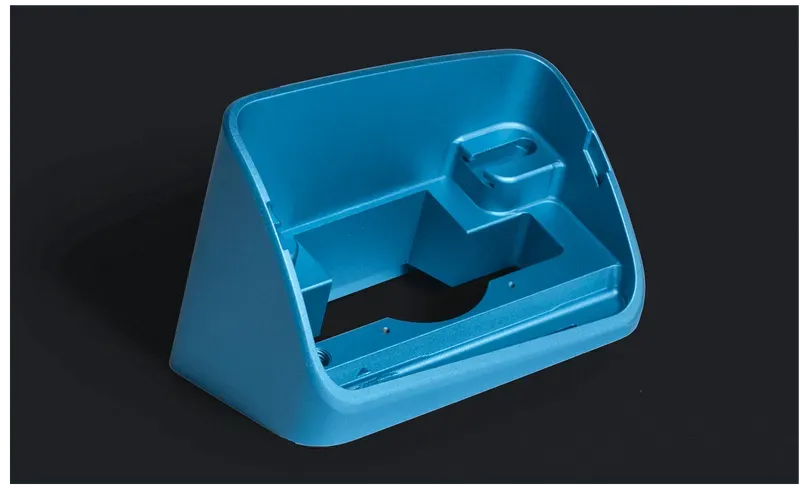
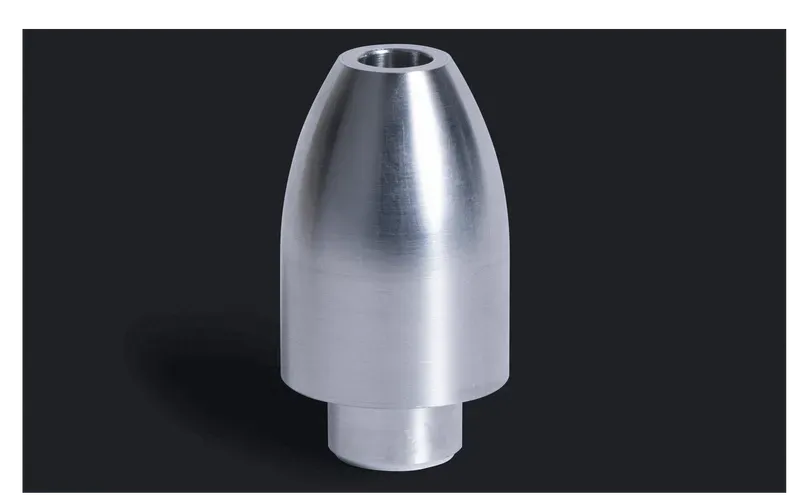
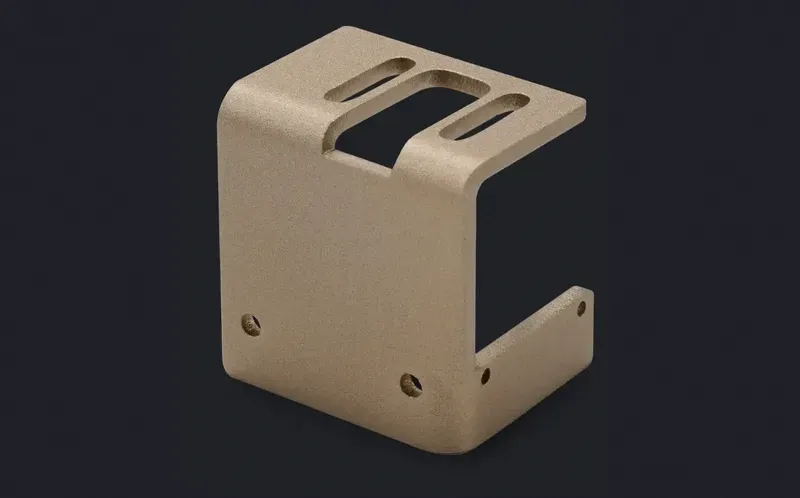
Nhôm là họ hợp kim được gia công nhiều nhất trong xưởng của chúng tôi: 6061 cho kết cấu thông dụng, 7075 cho móc treo cường độ cao, 2024 nơi độ bền mỏi quan trọng, cùng các hợp kim đúc cho phôi do khách hàng cung cấp.
Anod hóa bao gồm trong suốt, đen và anod hóa cứng cũng như phối màu, nhờ đó chi tiết nhôm gia công đến tay đã hoàn thiện và sẵn sàng lắp ráp.
Thông số kỹ thuật chính
| Specification | Value |
|---|---|
| tolerance | ±0.002" |
| tolerance | ±0.001" |
| lead time | 32 days |
| lead time | 60 days |
Material Grades & Properties
Aluminum Grades We Machine
| Grade | Standard | Characteristics |
|---|---|---|
| 6061-T6 | ASTM B209 | General purpose; good strength, corrosion resistance, weldability. Most common machining grade. |
| 7075-T6 | ASTM B211 | High strength (aerospace grade); lower corrosion resistance than 6061; not weld-friendly. |
| 2024-T3 | ASTM B211 | High strength-to-weight; poor corrosion resistance; common in aerospace structures. |
Key Properties of Machined Aluminum
- ✓Light weight
- ✓High strength-to-weight ratio
- ✓Natural corrosion resistance (oxide layer)
- ✓Excellent machinability
Typical tolerances:±0.05 mm standard; tighter with finishing passes
Applications for Aluminum Parts
- Aerospace fittings
- Automotive brackets
- Electronics housings
- Robotics frames
- Consumer product enclosures
Machining Notes for Aluminum
Machines fast at high cutting speeds; sharp tools prevent built-up edge; thin walls need support to avoid chatter.
Finishes for Aluminum Parts
- Clear/black anodizing
- Chromate conversion (Alodine)
- Powder coating
- Bead blasting
Năng lực
- Gia công 6061/7075/2024 theo bản vẽ
- Hình dạng thành mỏng và nhiều hốc
- Anod hóa Loại II và Loại III (cứng)
- Biên bản kích thước theo từng lô
Vật liệu điển hình
Nhôm 6061-T6, 7075-T6, 2024, 5052, phôi đúc ADC12 theo yêu cầu.
| Vật liệu / mác | Tình trạng tiêu chuẩn | Khả năng gia công | Ứng dụng điển hình |
|---|---|---|---|
| Aluminium 6061 | T6 (tôi dung dịch và ram già) | Dễ gia công: phoi dễ kiểm soát tốt | Tay đỡ, vỏ máy, đồ gá, bản mẫu đến sản xuất |
| Aluminium 7075 | T6 / T651 | Khó hơn: mòn dao nhiều hơn, cần lòng bàn cứng vững | Chi tiết chịu lực cao, nhạy trọng lượng; không hàn được |
| Stainless 304 / 304L | Ủ | Biến cứng khi gia công: tốc độ thấp hơn, ăn dao dương | Chống ăn mòn nói chung, thiết bị thực phẩm và công nghệ |
| Stainless 316 / 316L | Ủ | Cứng hơn 304: mòn dao nhiều hơn | Môi trường chloride, hàng hải, y tế và dược phẩm |
| Carbon steel 1018 / 1045 | Lăn nóng / ram thường | Từ dễ đến trung bình; cần chống gỉ | Trục, tấm, kết cấu hàn, thân đồ gá |
| Brass C360 | H02 bán cứng | Xuất sắc: tốc độ cao, bề mặt sạch | Phụ kiện nối, ống lót, đầu nối, chi tiết trang trí |
| Copper C110 | Ủ / H02 | Dính dao: dao sắc và góc cắt trước lớn | Dẫn điện, thanh dẫn điện, quản lý nhiệt |
| Titanium Grade 5 (Ti-6Al-4V) | Ủ sau cán | Khó: tốc độ thấp, kiểm soát nhiệt, mòn dao | Hàng không vũ trụ, y tế, chi tiết nhẹ chịu lực cao |
| Nhựa kỹ thuật (POM, PEEK, PA) | Ép đùn / ủ | Từ dễ đến dính dao: má kẹp mềm, dao sắc | Cách điện, ma sát thấp, chi tiết chống hóa chất và mài mòn |
Xử lý bề mặt
Anod hóa trong suốt/đen, anod hóa cứng, phun hạt, sơn tĩnh điện, chuyển hóa chromat.
| Xử lý bề mặt | Tác dụng | Chỉ định khi |
|---|---|---|
| Ngay sau gia công | Vết dao còn nhìn thấy; Ra thường 1.6-3.2 µm | Chi tiết chỉ cần hoạt động |
| Phun hạt | Bề mặt nhám đồng đều, che vết dao | Chi tiết thẩm mỹ trước khi anod hóa |
| Anod hóa Type II | Tạo lớp oxit; nhiều lựa chọn màu | Cần ngoại quan nhôm cùng khả năng chống ăn mòn và mài mòn nhẹ |
| Anod hóa cứng Type III | Lớp oxit dày hơn, cứng hơn | Bề mặt nhôm trượt hoặc chịu mài mòn |
| Chuyển hóa chromate | Màng bảo vệ mỏng vẫn dẫn điện | Mối nối điện hoặc tiếp địa trên nhôm |
| Mạ kền hóa học | Lớp đồng đều, cứng, chống ăn mòn | Chống mài mòn cộng ăn mòn, kể cả trong lỗ khoan |
| Mạ kẽm | Bảo vệ hy sinh kinh tế khỏi ăn mòn | Chi tiết thép trong nhà hoặc nơi che mưa nắng |
| Sơn tĩnh điện | Lớp dày, bền, trang trí | Khi ngoại quan là yêu cầu |
| Thụ động hóa | Loại bỏ sắt tự do và phục hồi màng oxit | Chi tiết thép không gỉ sau gia công |
| Ram khử ứng suất / xử lý nhiệt | Giải phóng ứng suất dư trước hoặc sau khi cắt | Thành mỏng và dung sai khít phải chịu được gia công |
Dung sai
ISO 2768-m; ±0.01 mm trên các đặc tính gia công trọng yếu.
| Dung sai trên bản vẽ | Yêu cầu gì | Ảnh hưởng đến chi phí và thời gian |
|---|---|---|
| Chung: ±0.25 mm / ±0.010 in | Đồ gá cắt tiêu chuẩn, kiểm tra kích thước | Mức nền: không phụ phí |
| Tiêu chuẩn: ±0.13 mm / ±0.005 in | Máy ở tình trạng tốt, kiểm tra mẫu đầu tiên | Phụ phí nhỏ; mặc định thường dùng khi báo giá |
| Khít: ±0.025 mm / ±0.001 in | Dao mài tinh hoặc kim cương, kiểm soát nhiệt độ, máy đo CMM | Bước nhảy: cắt chậm hơn cộng kiểm tra toàn phần |
| Chính xác: ±0.013 mm / ±0.0005 in | Đường tinh, thước giới hạn, môi trường kiểm soát | Gia công quyết định giá; thường là công đoạn riêng |
| Vị trí / độ vuông góc (GD&T) | Kiểm soát chuẩn (datum), một lần kẹp cho các chi tiết liên quan | Phụ thuộc vào số lần kẹp mà chuẩn trải qua |
| Độ nhám bề mặt Ra 0.8 µm hoặc mịn hơn | Bước ăn dao nhỏ hơn, đánh bóng hoặc đường hoàn thiện | Thêm một công đoạn, không chỉ thêm thời gian cắt |
Materials We Machine
- Copper
- Magnesium
- Zinc
- aluminum
Common Applications
- Aerospace Brackets
- Aluminum CNC Machining
- Consumer Parts
- Lightweight Enclosures
- Motion structures
- Oil Pans
- Outdoor Environment
- Rear Floors
- Steering Knuckles
- Sub-frames
- Turning
- aluminum prototyping
- engine blocks
- fluid systems
- heat exchanger systems
- mechanical assemblies
- suspension parts
Tùy chọn gia công
- CNC machining is a subtractive manufacturing process.
- Finishing Options: Black Oxide, Electropolishing, ENP, Media Blasting, Nickel Plating, Passivation, Powder Coating, Tumble Polishing, Zinc Plating, Vibratory Tumbling
- EPX 82 is processed using Carbon DLS
- MUD is a type of mold that uses a standard injection molding frame.
- Different taper turning methods suit different jobs. Compound slides often handle short tapers, while CNC interpolation and taper attachments improve repeatability on longer parts
- G92 is used by programming one or more G92's right after the G76 threading cycle
- Estimates are provided through an auto-quoted method.
- EDM relies on a voltage and a thin wire
- Advanced machining processes like micro-machining and EDM are used to create small, precise mold cavities and cores
Surface Finish Reference
- The finish of MoldTech MT11010 is a fine matte texture.
- The finish of MoldTech MT11020 is a medium matte texture.
- The finish of MoldTech MT11030 is a coarse matte texture.
- SPI A-1 has a surface roughness of 0.012–0.025 µm.
- SPI B-2 has a finish of Medium semi-gloss.
- SPI B-2 has a surface roughness of 0.10–0.15 µm.
- SPI C-3 has a surface roughness of 0.63–0.70 µm.
- Super high gloss, polished with a Grade #3 (6000-grit) diamond buff to Ra 0.012–0.025 µm.
- Medium semi-gloss, finished with 400-grit paper to Ra 0.10–0.15 µm.
- Normal matte, polished with 320-grit stone to Ra 0.63–0.70 µm.
Tolerance Reference
- The tolerance with drawing for CNC Milling is as low as +/- 0.005 mm.
- FDM 3D printing offers a low-cost component with average accuracy and uses thermoplastics for 3D printing.
- Wire Cut EDM is highly accurate.
- The U6 H.E.A.T machine achieves tight tolerances.
- Die sinker EDM is capable of maintaining tight tolerances
- The shop needs to have CNC machines that can achieve a specific tolerance.
Industries We Serve
- antennas
- automotive
- CNC machined parts
- custom parts
- electronics
- medical diagnostic
- optical displays
- optical_systems
Material Reference
- ABS
- Austenitic Stainless Steel
- Carbon steel
- ceramic
- composites
- Copper - T2
- copper or graphite
- Hardened Materials
- High Impact Polystyrene
- Low-density polyethylene
- MDF
- metal
- Polybutylene Terephthalate
- SUS304
- thermoplastics
- thick metal sheets
- tungsten carbide
Câu hỏi thường gặp
Tôi nên chọn mác nhôm nào?
6061-T6 đáp ứng phần lớn móc treo và vỏ máy; chọn 7075-T6 khi tỷ lệ bền trên trọng lượng là yếu tố quyết định. Hãy gửi bài toán tải trọng và chúng tôi sẽ tư vấn.
Anod hóa có làm thay đổi kích thước không?
Có, một chút. Loại II cộng thêm khoảng 0.005–0.015 mm mỗi bề mặt; chúng tôi bù trước các kích thước trọng yếu khi anod hóa được chỉ định.
Quý vị có phối được màu anod tùy chọn không?
Có, với điều kiện được duyệt mẫu. Quý vị cung cấp mã màu hoặc mẫu vật lý và chúng tôi sẽ phối đúng trước lô sản xuất.
What is the minimum order quantity (MOQ)?
Prototypes from 1 pc. Low-volume production typical 50-500 pcs. No forced MOQ on custom parts; unit price drops with volume.
What is the typical lead time?
Industry benchmark: instant-quote platforms deliver prototypes in 1-3 business days. Our own production: prototypes 5-10 working days, including in-house QC and shipping. Production: 2-4 weeks depending on quantity/finishing. Express options exist; finishing adds days.
How do I get a quote and what information do you need?
3D files (STEP/IGS) + 2D drawing with tolerances. Material, quantity, finish, destination country. Quote turnaround: 24-48h typical.
What tolerance should I specify?
Specify tight tolerances only on critical features. Standard ±0.1 mm covers most features. Tighter tolerance = cost multiplier; apply selectively via drawing GD&T.
How is quality controlled?
First-article inspection in our own shop before the first production order. In-process checks. Final inspection report (dimensions) with shipment. Material certs (mill test reports) on request.
Is my design protected?
NDA before file exchange. Files used only for your production. No resale of custom designs.
Which material should I choose?
Function first: strength, weight, corrosion, cost. Common pairings: 6061 general, 304/316 corrosive env., PEEK medical. See materials guide pages.
Which surface finish do I need?
Anodizing for aluminum corrosion/wear/color. Passivation for stainless. Plating for conductivity/steel protection. Cosmetic vs functional distinction.
How do you ship and what terms?
DHL/FedEx/UPS express for samples and small batches. Air/sea freight for production volumes. Incoterms: EXW/FOB/DAP/DDP options.
Sources · 4
- rapiddirect.comIndustry peer technical page
- jlccnc.comIndustry peer technical page
- kineticdiecasting.comUnclassified source
- fictiv.comIndustry peer technical page
Technical references cited for verifiability — not supplier recommendations. Browse the research library.
Dịch vụ liên quan
Related Knowledge
Capability commitments on this page are owner-confirmed (2026-09-21).