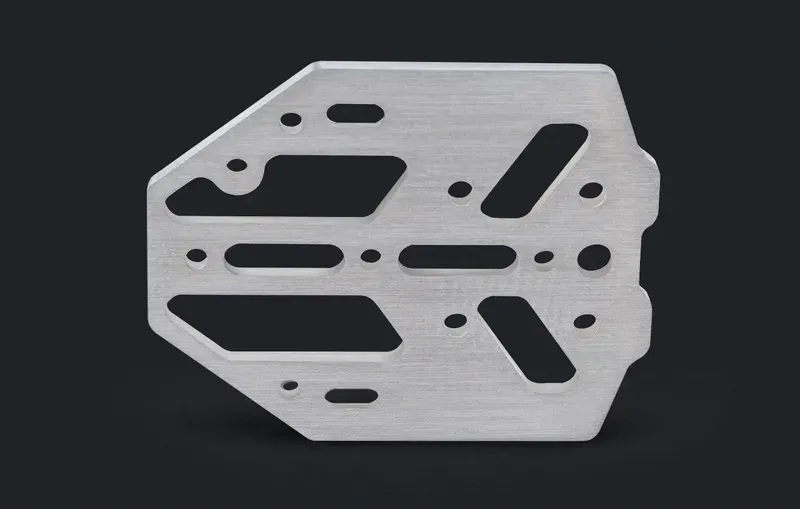
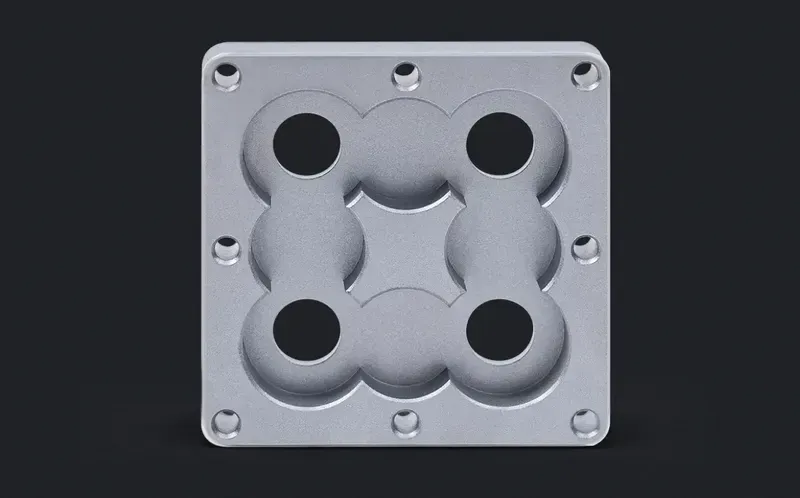
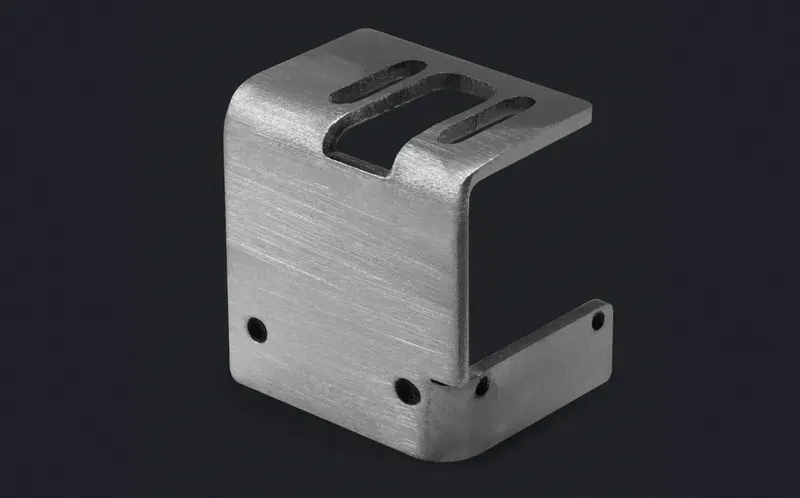
İşlediğimiz paslanmaz çelik parçalar gıda temaslı bağlantı parçaları, deniz ekipmanı, medikal tarzı bileşenler ve endüstriyel ekipmanları kapsar: serbest işlenen bağlantı parçaları için 303, genel korozyon direnci için 304, klorür ve deniz ortamları için 316L, mukavemetin önemli olduğu yerlerde 17-4PH.
Doğru kalite seçimi, takım yolları ve pasivasyon, paslanmaz parçaların sahada performans göstermesini sağlayan şeydir — korozyonla ilgili tanımları DFM incelemesi sırasında işaretleriz.
Önemli Özellikler
| Specification | Value |
|---|---|
| lead time | 7 days |
| tolerance | ±0.002 in |
| lead time | 80 days |
| lead time | 120 days |
| surface finish | Ra0.6 |
Material Grades & Properties
Stainless Steel Grades We Machine
| Grade | Standard | Characteristics |
|---|---|---|
| 304 | ASTM A240 | General purpose austenitic; excellent corrosion resistance; work-hardens. |
| 316/316L | ASTM A240 | Added molybdenum for chloride resistance; marine and medical use. |
| 17-4 PH | ASTM A564 | Precipitation hardening; high strength after heat treatment; aerospace/medical. |
| 303 | ASTM A582 | Sulfur-added free-machining grade; best machinability of austenitic; lower corrosion resistance. |
Key Properties of Machined Stainless Steel
- ✓Corrosion resistance
- ✓High strength
- ✓Heat resistance
- ✓Hygienic (food/medical compatible grades)
Typical tolerances:±0.05 mm standard; ±0.01 mm achievable with finishing
Applications for Stainless Steel Parts
- Medical instruments and implants
- Food processing equipment
- Marine hardware
- Valves and fittings
- Aerospace components
Machining Notes for Stainless Steel
Work-hardens quickly: maintain consistent feed, sharp tooling, adequate coolant. 303 machines easiest; 316 slowest of the common grades.
Finishes for Stainless Steel Parts
- Passivation
- Electropolishing
- Bead blasting
- Vibratory finishing
Yetenekler
- Teknik resme göre 303/304/316L/17-4PH işleme
- Müşteri şartnamesine göre pasivasyon
- Talep üzerine elektropolizma
- Tek bağlamada diş ve bağlantı parçası geometrisi
Tipik malzemeler
Paslanmaz 303, 304, 316/316L, 17-4PH, 410, 416; talep üzerine dupleks.
| Malzeme / kalite | Tipik durum | İşlenebilirlik | Nerede kullanılır |
|---|---|---|---|
| Aluminium 6061 | T6 (çözeltilmiş ve yaşlandırılmış) | Kolay: iyi talaş kontrolü, rahat işlenir | Braketler, gövdehler, bağlama aparatları, prototipten seri üretime |
| Aluminium 7075 | T6 / T651 | Daha zor: fazla takım aşınması, rijit bağlama gerektirir | Yüksek mukavemetli, ağırlık-kritik parçalar; kaynağa uygun değil |
| Stainless 304 / 304L | Tavlanmış | Sertleşir: daha düşük devir, pozitif ilerleme | Genel korozyon direnci, gıda ve proses ekipmanları |
| Stainless 316 / 316L | Tavlanmış | 304'den daha zor: fazla takım aşınması | Klorürlü ortamlar, denizcilik, medikal ve farmasötik uygulamalar |
| Carbon steel 1018 / 1045 | Haddelenmiş / normalize | Kolaydan orta seviyeye; paslanmaya karşı korunmalı | Mil, levha, kaynaklı konstrüksiyonlar, aparat gövdeleri |
| Brass C360 | H02 yarı sert | Mükemmel: yüksek devir, temiz yüzey | Fittingler, burçlar, konektörler, dekoratif parçalar |
| Copper C110 | Tavlanmış / H02 | Yapışkan: keskin takımlar ve büyük açılar gerekir | İletkenlik, baralar, ısı yönetimi |
| Titanium Grade 5 (Ti-6Al-4V) | Fabrika tavlamalı | Zor: düşük devir, ısı kontrolü, takım aşınması | Havacılık ve uzay, medikal, hafif yüksek mukavemetli parçalar |
| Mühendislik plastikleri (POM, PEEK, PA) | Ektrüde / tavlanmış | Kolaydan yapışkana: yumuşak ağızlar, keskin takımlar | İzolasyon, düşük sürtünme, kimya ve aşınma parçaları |
Kaplamalar
Pasivasyon, elektropolizma, kum neşterleme, parlatma, siyah oksit.
| Yüzey işlemi | Ne yapar | Ne zaman belirtilir |
|---|---|---|
| İşlenmiş olarak | Takım izleri görünür; Ra tipik 1.6-3.2 µm | Parça yalnızca işlevini görecekse |
| Kum veya cam bilye püskürtme | Düzgün mat yüzey, takım izlerini gizler | Eloksal öncesi kozmetik parçalar |
| Eloksal Type II | Oksit tabakası oluşturur; renk seçenekleri | Alüminyum görünümü artı orta düzey korozyon ve aşınma direnci |
| Sert eloksal Type III | Daha kalın ve sert oksit tabakası | Kayma veya aşınmaya maruz alüminyum yüzeyler |
| Kromat dönüşümü | İletkenliğini koruyan ince koruyucu film | Alüminyumda elektriksel birleştirme veya topraklama |
| Elektrosız nikel | Düzgün, sert, korozyona dayanıklı tabaka | Aşınma artı korozyon, delik iç yüzeyleri dahil |
| Çinko kaplama | Ekonomik, fedakâr korozyon koruması | İç mekân veya korumalı ortamdaki çelik parçalar |
| Toz boya | Kalın, dayanıklı, dekoratif tabaka | Görünüm şart olduğunda |
| Pasivasyon | Serbest demiri uzaklaştırır, oksit tabakasını onarır | İşleme sonrası paslanmaz çelik parçalar |
| Gerilmeye alma / ısıl işlem | İşleme öncesi veya sonrası artık gerilmeleri giderir | İşlemeye dayanması gereken ince et kalınlıkları ve sıkı toleranslar |
Toleranslar
ISO 2768-m standart; kritik özelliklerde ±0.01 mm.
| Teknik resim ibaresi | Neyi gerektirir | Maliyet ve teslim süresine etkisi |
|---|---|---|
| Genel: ±0.25 mm / ±0.010 in | Standart takım, boyut kontrolü | Referans: ek ücret yok |
| Standart: ±0.13 mm / ±0.005 in | İyi durumda tezgâh, ilk parça kontrolü | Küçük ek ücret; tekliflerde olağan varsayılan |
| Sıkı: ±0.025 mm / ±0.001 in | Taşlanmış veya elmas takım, sıcaklık kontrolü, CMM | Kademeli artış: yavaş kesimler artı tam denetim |
| Hassas: ±0.013 mm / ±0.0005 in | Bitirme geçişleri, mastarlar, kontrollü ortam | Fiyatı işleme hâkim olur; sıkça ayrı bir operasyon |
| Konum / açısallık (GD&T) | Referans kontrolü, ilişkili yüzeyler için tek bağlama | Referansın kaç bağlamaya yayıldığına bağlı |
| Yüzey pürüzlülüğü Ra 0.8 µm veya daha iyi | Daha ince geçişler, parlatma veya bitirme geçişi | Sadece işleme süresi değil ayrı bir işlem adımı ekler |
Materials We Machine
- Brass
- Copper
- Stainless Steel 201
- Titanium
- iron
- molybdenum
- nickel-pig-iron
- raw materials
- steel
Common Applications
- Airplane Parts
- Chemical Housings
- Cover
- Decorative/Architectural
- Equipment Panels
- Food parts
- Food-Contact
- Freshwater Environment
- Marine Parts
- Marine hardware
- Medical Machines
- Micro Mechanical Parts
- Oxidizing Environment
- Stainless Steel CNC Machining
- Water Pipes
- Weak Acids
- architectural design
- chloride-rich environments
- city buildings
- corrosive process environments
- critical fasteners
- dive watch
- folding hinges
- food machines
İşlem Seçenekleri
- CNC machining is a subtractive manufacturing process.
- Finishing Options: Black Oxide, Electropolishing, ENP, Media Blasting, Nickel Plating, Passivation, Powder Coating, Tumble Polishing, Zinc Plating, Vibratory Tumbling
- EPX 82 is processed using Carbon DLS
- MUD is a type of mold that uses a standard injection molding frame.
- Different taper turning methods suit different jobs. Compound slides often handle short tapers, while CNC interpolation and taper attachments improve repeatability on longer parts
- G92 is used by programming one or more G92's right after the G76 threading cycle
- Estimates are provided through an auto-quoted method.
- EDM relies on a voltage and a thin wire
- Advanced machining processes like micro-machining and EDM are used to create small, precise mold cavities and cores
Surface Finish Reference
- The finish of MoldTech MT11010 is a fine matte texture.
- The finish of MoldTech MT11020 is a medium matte texture.
- The finish of MoldTech MT11030 is a coarse matte texture.
- SPI A-1 has a surface roughness of 0.012–0.025 µm.
- SPI B-2 has a finish of Medium semi-gloss.
- SPI B-2 has a surface roughness of 0.10–0.15 µm.
- SPI C-3 has a surface roughness of 0.63–0.70 µm.
- Super high gloss, polished with a Grade #3 (6000-grit) diamond buff to Ra 0.012–0.025 µm.
- Medium semi-gloss, finished with 400-grit paper to Ra 0.10–0.15 µm.
- Normal matte, polished with 320-grit stone to Ra 0.63–0.70 µm.
Tolerance Reference
- The tolerance with drawing for CNC Milling is as low as +/- 0.005 mm.
- FDM 3D printing offers a low-cost component with average accuracy and uses thermoplastics for 3D printing.
- Wire Cut EDM is highly accurate.
- The U6 H.E.A.T machine achieves tight tolerances.
- Die sinker EDM is capable of maintaining tight tolerances
- The shop needs to have CNC machines that can achieve a specific tolerance.
Industries We Serve
- antennas
- automotive
- CNC machined parts
- custom parts
- electronics
- medical diagnostic
- optical displays
- optical_systems
Material Reference
- ABS
- Austenitic Stainless Steel
- Carbon steel
- ceramic
- composites
- Copper - T2
- copper or graphite
- Hardened Materials
- High Impact Polystyrene
- Low-density polyethylene
- MDF
- metal
- Polybutylene Terephthalate
- SUS304
- thermoplastics
- thick metal sheets
- tungsten carbide
Sıkça sorulan sorular
Deniz ortamı için hangi paslanmaz kalite?
Klorür teması için varsayılan 316L'dir. Yüksek mukavemetli deniz ekipmanında H900 kondisyonunda 17-4PH yaygındır; ortam verilerinizle teyit edin.
Malzeme sertifikası sağlıyor musunuz?
Evet, haddehane deney sertifikaları (gerektiğinde EN 10204 3.1) talep halinde sevkiyatla birlikte sağlanır.
Gıda temaslı bağlantı parçaları işleyebiliyor musunuz?
Evet. Hijyenik gereksinimleri teknik resimde belirtin — hijyenik bağlantı parçalarına özgü pürüzsüz iç radyüsleri ve yüzey işlemlerini işleriz.
What is the minimum order quantity (MOQ)?
Prototypes from 1 pc. Low-volume production typical 50-500 pcs. No forced MOQ on custom parts; unit price drops with volume.
What is the typical lead time?
Industry benchmark: instant-quote platforms deliver prototypes in 1-3 business days. Our own production: prototypes 5-10 working days, including in-house QC and shipping. Production: 2-4 weeks depending on quantity/finishing. Express options exist; finishing adds days.
How do I get a quote and what information do you need?
3D files (STEP/IGS) + 2D drawing with tolerances. Material, quantity, finish, destination country. Quote turnaround: 24-48h typical.
What tolerance should I specify?
Specify tight tolerances only on critical features. Standard ±0.1 mm covers most features. Tighter tolerance = cost multiplier; apply selectively via drawing GD&T.
How is quality controlled?
First-article inspection in our own shop before the first production order. In-process checks. Final inspection report (dimensions) with shipment. Material certs (mill test reports) on request.
Is my design protected?
NDA before file exchange. Files used only for your production. No resale of custom designs.
Which material should I choose?
Function first: strength, weight, corrosion, cost. Common pairings: 6061 general, 304/316 corrosive env., PEEK medical. See materials guide pages.
Which surface finish do I need?
Anodizing for aluminum corrosion/wear/color. Passivation for stainless. Plating for conductivity/steel protection. Cosmetic vs functional distinction.
How do you ship and what terms?
DHL/FedEx/UPS express for samples and small batches. Air/sea freight for production volumes. Incoterms: EXW/FOB/DAP/DDP options.
Sources · 4
- seathertechnology.comUnclassified source
- fictiv.comIndustry peer technical page
- actionstainless.comUnclassified source
- yshsteel.comUnclassified source
Technical references cited for verifiability — not supplier recommendations. Browse the research library.
İlgili hizmetler
Related Knowledge
Capability commitments on this page are owner-confirmed (2026-09-21).